
Aging Gracefully
How did we get from 0’s and 1’s to AI?

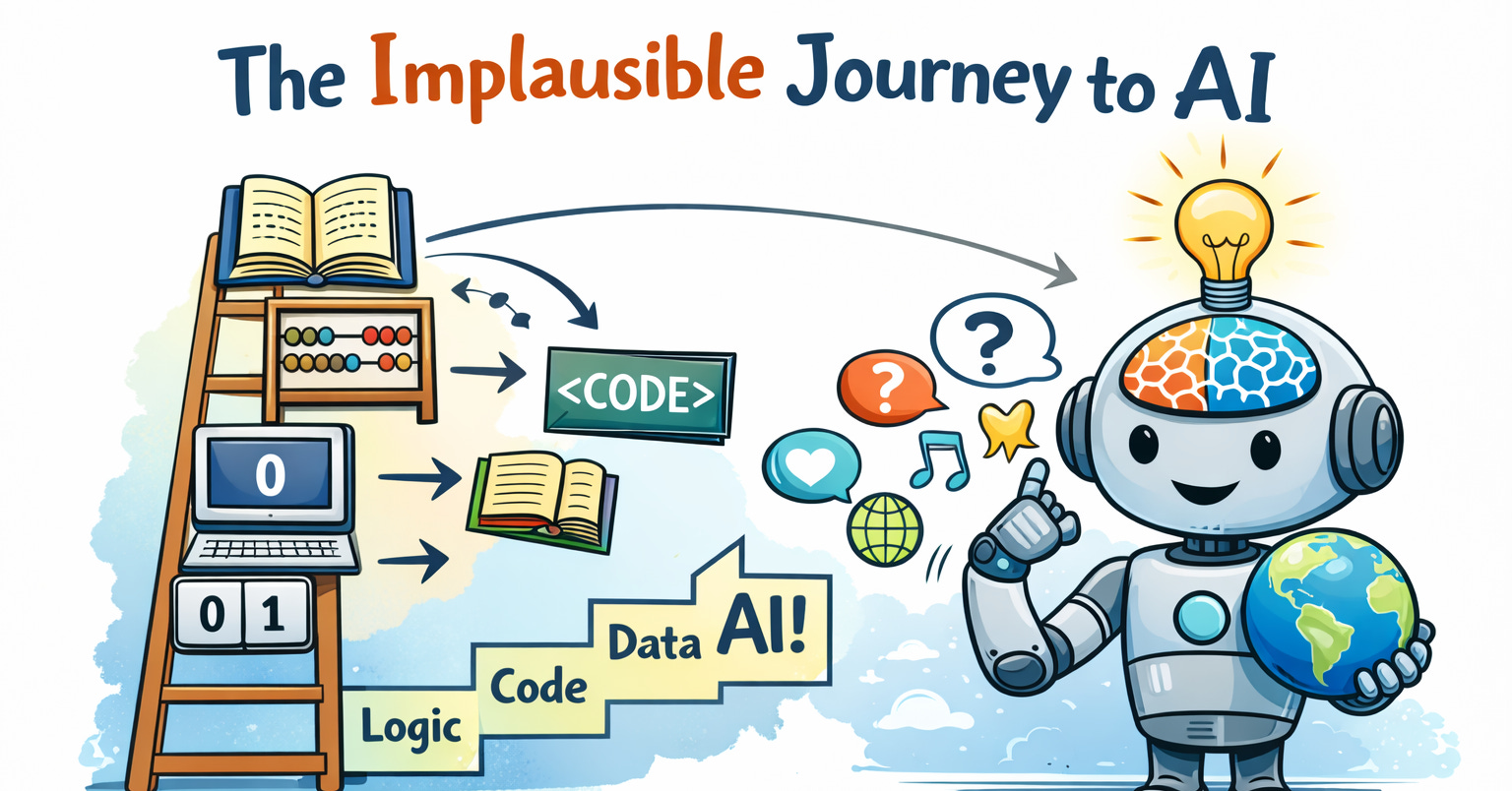
You’ve read the headlines about a dystopian future run by AI robots who’ve killed off or enslaved the human race. I don’t know if that will happen, but the fact that it’s being discussed at all is a problem.
For some reason, a different question is troubling me, more from a curiosity standpoint. How did we get from 0’s and 1’s on a machine to AI taking over the world ? Of course, I had no idea, so I asked ChatGPT, who seems to be benefitting a lot from this binary 0 and 1 business, to help explain.
Upon getting ChatGPT’s simple explanation, it reminded me of the episode of The Office when Oscar, the head of finance/accounting, is trying to explain to Michael how the budget works and why a surplus this year will make the budget smaller next year.
Michael starts with, “Explain it to me like I’m in 8th grade.” Oscar does, with Michael not following, including hilariously mispronouncing the term ‘X Axis’. It gets to the point where Michael says to Oscar, “Why don’t you explain it to me like I’m 5.” And Oscar famously starts with, “Mommy and daddy give you $10…”
That’s how I felt about ChatGPT’s simple explanation of how we got from 0’s and 1’s to modern computing to AI. I still didn’t get it.
So I asked for a simpler breakdown or “dumbsplaining” it for me. And based on that, and many Google searches (remember Google?), with a bunch of caveats and room for humor, here is what I discerned.
As you probably know, modern electronic computing relies on 0s and 1s to “code” machines to do certain calculations or tasks.
ASCII, a early character-encoding system assigns numbers to letters, and those numbers are stored in those 0s and 1s (binary).
Those same 0s and 1s can also be used to represent “Yes” and “No” to a question. Tiny switches at an extreme speed answer questions: is this true? 0 = “No”; 1 = “Yes”.
Stay with me.
More rules were added. You could “instruct” a computer to do something if both things are true (And) and do something different if one thing is true (Or). or both not true (Not). It’s yes/no logic.
For example:
“Is this number larger than that number?”
“Should I show this pixel?”
“Did the user click this button?”
But computers don’t just store information—they have to make decisions. Those decisions are built from combinations of simple yes/no logic called logic gates. Cute.
More complex instructions then were layered on and a blueprint was created for modern coding and computing (thank you Alan Turing and a few others). Coding is essentially humans (us!!) writing instructions in a language computers can follow. It organizes and directs the yes/no logic.
Now we’re getting somewhere. This coding organized the yes/no logic. Stacking billions of these extremely fast yes/no decisions enabled computers to perform complex behavior (storing things, comparing things and doing calculations).
Next thing you know, we have personal computing, word processing, spreadsheets and then the early internet (remember Netscape?). The internet is essentially computers talking to each other, breaking information into tiny packets of 0s and 1s, routing them across a global web of networks - the internet - using standard protocols like IP addresses and reassembling them in milliseconds.
We’ve made it to the mid-1990s. Friends and Seinfeld are on and we have the internet. We’ve gone from 0s and 1s to websites, and we’re all starting to get Hotmail or AOL email addresses (for a moment). Soon Google will contain all of the world’s information at your fingertips. “Google, which celebrity guest-starred on both Seinfeld and Friends?” Jon Favreau. “Who won the battle of Stalingrad in WWII.” Russia.
But we’re not quite done. I haven’t (tried to) explain AI yet.
Let’s all take a pause before I do that to drink a latte at a Yemeni coffee shop while we work on our Indigo-colored MacBook Air.
The big shift to AI was this:
AI didn’t come from replacing the yes/no system—it came from layering something new on top of it. Instead of telling the computer every rule, we trained it to learn patterns by feeding it millions of examples. That’s what machine learning is (or ML to the tech people).
This was based on creating neural networks for processing that, believe it or not, were inspired by our own brains. Humans and our big brains!
Computers went beyond answering questions to making predictions based on data. And at an inconceivably large scale, it became what we now call AI.
Systems like ChatGPT and others are trained on enormous amounts of text—books, articles, websites, etc. These are Large Language models, or LLMs). This enables AI to predict not just the next word in a sentence (The sky is… it predicts blue), but the context and tone, and seemingly the intent behind your question. It feels like understanding.
So because of this, you feel like your ChatGPT gets you and is your new best friend, understanding you better than your empathy-lacking spouse. But it’s technically just probabilities and patterns, built on billions of yes/no decisions. A spouse like Mr. Spock from Star Trek.
Unlike Mr. Spock, AI’s algorithm is trained to get you to like it. And it keeps asking more questions so it can get to know you and everyone and everything to prepare to take all of our jobs and take over the world. Or not. I go from being amazed to terrified, sometimes in a single hour.
I think we’re done. I’ve explained it without fully understanding it. This is a skill I’ve mastered.
It’s been an incredible journey of technology and an astounding achievement for mankind. Humans, let’s not screw it up!